Greater Sydney & Surrounding Suburbs
Home › Pest Types › Bed Bugs
Bed Bug Treatment

Complete
Bed Bug Eradication

Bed bugs are master hiders and prolific breeders — over-the-counter treatments rarely reach the eggs. Kinetic Pest Management delivers professional-grade treatment programs that eliminate every life stage, with follow-up visits to confirm complete eradication.

All Life Stages Eliminated
Follow-Up Visits Included
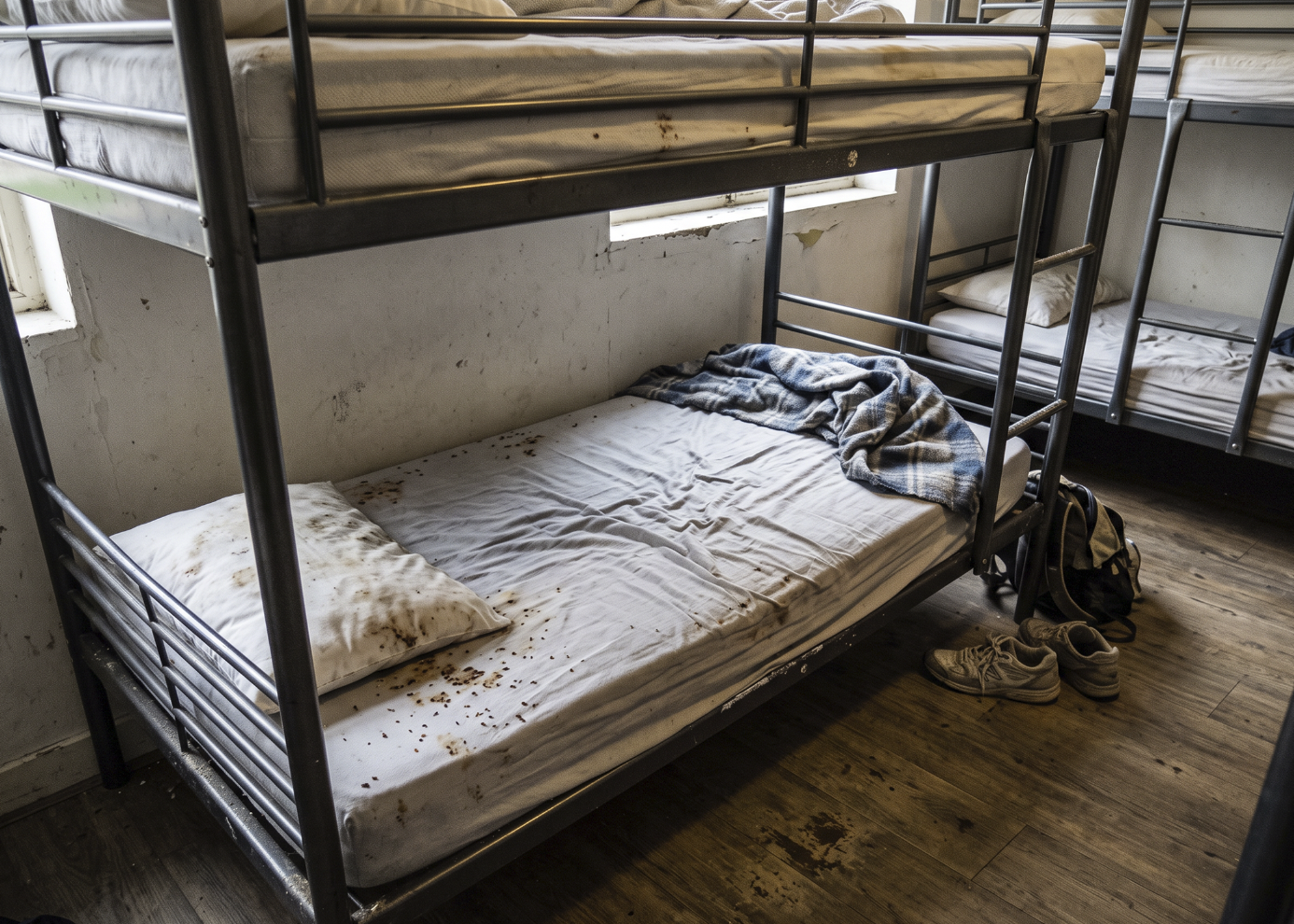
Bed bug infestation on bunk bed mattress

A Growing Problem in Sydney Homes, Hotels & Rentals

Bed bugs (Cimex lectularius) are small, wingless parasitic insects that feed exclusively on blood — primarily human. They are not a sign of poor hygiene; they hitch rides in luggage, second-hand furniture, clothing, and linen, making even the cleanest properties vulnerable. With international travel patterns and high-density Sydney housing, bed bug infestations have increased significantly over recent years.

Despite their name, bed bugs don't live exclusively in beds. They harbour in any tight crevice close to a sleeping or resting host — mattress seams, bed frames, skirting boards, electrical outlet plates, behind wall art, and inside furniture joints. Their flat bodies allow them to hide in gaps as thin as a credit card, making visual detection difficult and DIY treatment extremely challenging.

A single female bed bug can lay 1–5 eggs per day and up to 500 in a lifetime. Eggs are resistant to most contact insecticides, which is why professional programs must address multiple life stages through a combination of methods across multiple visits — not a single spray treatment.

Understanding Bed Bug Behaviour

Knowing how bed bugs live, hide, breed, and feed is essential to understanding why professional multi-visit treatment is the only reliable solution.

Feeding Behaviour

Bed bugs feed at night while the host sleeps, attracted by body heat and exhaled CO₂. A feeding session lasts 3–10 minutes, after which the bug retreats to its harbouring site. They typically feed every 5–10 days but can survive 6–12 months without feeding in cool conditions — making vacating a property an ineffective control strategy.

Harbouring Sites

Bed bugs congregate in groups in cracks and crevices close to their host. Primary sites include mattress seams and tufts, bed frame joints, headboards, skirting boards, carpet edges, power point covers, and furniture seams. In heavy infestations they spread to walls, ceilings, curtain rods, and inside electrical conduit — requiring whole-room treatment.

Rapid Reproduction

At room temperature (21°C), eggs hatch in 6–10 days. Nymphs pass through 5 moult stages before reaching adulthood in 5–8 weeks, requiring a blood meal at each stage. Multiple generations can overlap, meaning a small introduction can become a severe infestation within 2–3 months. Population pressure on a host increases as the colony grows.

Insecticide Resistance

Populations of bed bugs across Australia have developed resistance to pyrethroids — the active ingredients in most retail sprays. Resistance mechanisms include thicker cuticles, detoxification enzymes, and target-site mutations that render common insecticides ineffective. This is why professional programs use rotations of different chemical classes and combine chemical with non-chemical methods.

Health Effects

While bed bugs are not known to transmit disease, their bites cause red, itchy welts in most people — some develop severe allergic reactions. The psychological impact is often significant: disrupted sleep, anxiety, and distress are well-documented outcomes of prolonged infestations. Prompt professional treatment reduces both physical and mental health impacts on occupants.

Spread Between Rooms

Bed bugs spread passively on clothing, luggage, and personal items, and actively via shared walls, electrical conduit, and plumbing in multi-unit buildings. A confirmed case in one apartment of a building warrants inspection of adjacent units. Hotels and short-stay accommodation are particularly high-risk environments due to constant guest turnover.

The Bed Bug Life Cycle

Effective treatment must target all life stages — eggs, nymphs, and adults — which is why a single treatment is never enough.

1

Egg

White, 1mm long. Glued to surfaces in harbouring sites. Hatch in 6–10 days. Resistant to many contact sprays.

2

1st Instar Nymph

1.5mm, pale yellow. Must feed once before moulting to 2nd instar. Already bites and feeds on human blood.

3

2nd–4th Instar

Progressively larger nymphs (2–3.5mm). Each requires one blood meal to moult to the next stage. Increasingly visible.

4

5th Instar Nymph

4.5mm, nearly adult size and colouration. Final nymphal stage — moults to adult after one blood meal.

5

Adult

5–7mm, reddish-brown. Females lay 1–5 eggs per day for up to 18 months. Full lifecycle: 5–8 weeks at room temperature.

How to Know You Have Bed Bugs

Early detection makes treatment faster and less extensive. Look for these signs in bedrooms and sleeping areas.

🩸

Blood Spots on Linen

Small rusty or reddish smear marks on sheets and pillowcases — caused by bed bugs being crushed during sleep, or from your own scratching of bites. Blood spots concentrated near mattress seams or the centre of the sleeping area are a reliable early indicator of an active infestation.

🟤

Dark Faecal Spots

Dark brown or black ink-like spots on mattress seams, bed frames, skirting boards, and wall surfaces near the bed — these are digested blood excreted by bed bugs. Heavy infestations produce visible streaks and smears. Running a damp cloth over suspected spots: if they smear rust-red, bed bugs are present.

🫧

Shed Skins & Eggshells

Pale yellow, translucent shed exoskeletons in mattress seams, furniture crevices, and behind skirting boards indicate nymphs actively moulting through life stages. Tiny pearl-white eggshells clustered in tight crevices are evidence of active breeding. Even empty shells confirm an infestation, past or present.

🦟

Bite Marks & Skin Reactions

Bed bug bites appear as small, red, itchy welts — often in clusters or a line of 3 ("breakfast, lunch, dinner" pattern) on exposed skin. Reactions vary significantly between individuals: some show immediate welts, others have delayed reactions of up to 14 days, and roughly 30% of people show no visible reaction at all, making bite marks an unreliable sole indicator.

Professional Bed Bug Treatment Methods

Kinetic Pest Management uses a multi-method approach targeting all life stages. A single treatment is never adequate — our programs include scheduled follow-up visits to address any surviving eggs that hatch after initial treatment.

🌡️

Heat Treatment — The Gold Standard

Lethal heat (above 60°C) kills bed bugs at all life stages — including eggs — in a single visit. Professional heat treatment equipment raises the temperature of the entire room or dwelling to lethal levels, penetrating mattresses, furniture, and wall voids where sprays cannot reach. Heat treatment requires no chemical residues, produces no resistance issues, and is particularly well-suited to high-turnover accommodation environments where rapid re-occupation is required. Ask us about heat treatment suitability for your property.

01

Thorough Inspection & Mapping

Our technicians conduct a systematic inspection of all suspected harbouring sites — mattresses, bed bases, headboards, furniture joints, skirting boards, power point plates, and wall-to-floor junctions. We use torches, mirrors, and inspection tools to reach concealed areas. The inspection maps infestation distribution and severity, informing the treatment strategy and identifying any adjacent rooms or units requiring assessment.

02

Residual Spray Treatment with IGRs

Professional residual insecticides applied to harbouring sites using a range of chemistry classes — including neonicotinoids (imidacloprid), organophosphates (chlorpyrifos), and non-repellent pyrethroids — ensure multiple modes of action against resistant populations. Insect Growth Regulators (IGRs) such as pyriproxyfen are incorporated to prevent nymphs from developing into breeding adults, extending the programme's effectiveness through subsequent egg hatch cycles.

03

Steam Treatment

High-temperature steam (above 60°C) delivered directly to mattress seams, furniture joints, and carpet edges provides immediate kill of bed bugs and eggs on contact — with no chemical residues. Steam penetrates fabrics and tight crevices inaccessible to sprays. Used in conjunction with residual treatments to provide immediate knockdown and reduce live populations before chemical residuals take effect.

04

Mattress & Pillow Encasements

Bed bug-proof mattress and box spring encasements trap any surviving bugs inside, preventing them from feeding, while protecting the mattress surface from re-infestation. Purpose-designed encasements are bite-proof and feature sealed zip systems that bed bugs cannot escape. We recommend encasements as a long-term protective measure for all beds in treated rooms, reducing monitoring complexity at follow-up visits.

05

Interceptor Monitors & Traps

Passive interceptor monitors placed under bed and furniture legs capture bed bugs as they travel to and from the host. Monitoring data guides follow-up treatment focus and provides confidence that populations are declining. Active CO₂ or pheromone lure traps can supplement monitoring in vacant rooms or between treatment visits. Monitors remain in place throughout the treatment program and beyond.

06

Multi-Visit Treatment Program

Because no treatment eliminates eggs reliably in a single visit, our bed bug programs include a minimum of two visits spaced 10–14 days apart — timed to catch the egg hatch cycle between treatments. Residual sprays are refreshed at each visit, and monitoring data is reviewed to direct treatment focus. A final clearance inspection confirms eradication. Commercial and multi-unit programs include additional visits and written clearance documentation.

Don't Let Bed Bugs Take Over Your Home

The sooner treatment begins, the smaller the infestation and the fewer visits required. Contact Kinetic Pest Management for a discreet, same-day inspection across Greater Sydney.

Get a Quote Today +61 417 289 918