Proudly Australian Owned & Operated — Fully Licensed & Insured
Home›Pest Types›Termites
Termite Specialists

Termites — Australia's Most Destructive Pest

Termites cause more structural damage to Australian homes each year than fire, floods, and storms combined. Understanding these silent destroyers is the first step to protecting your property.

100% Satisfaction Guaranteed
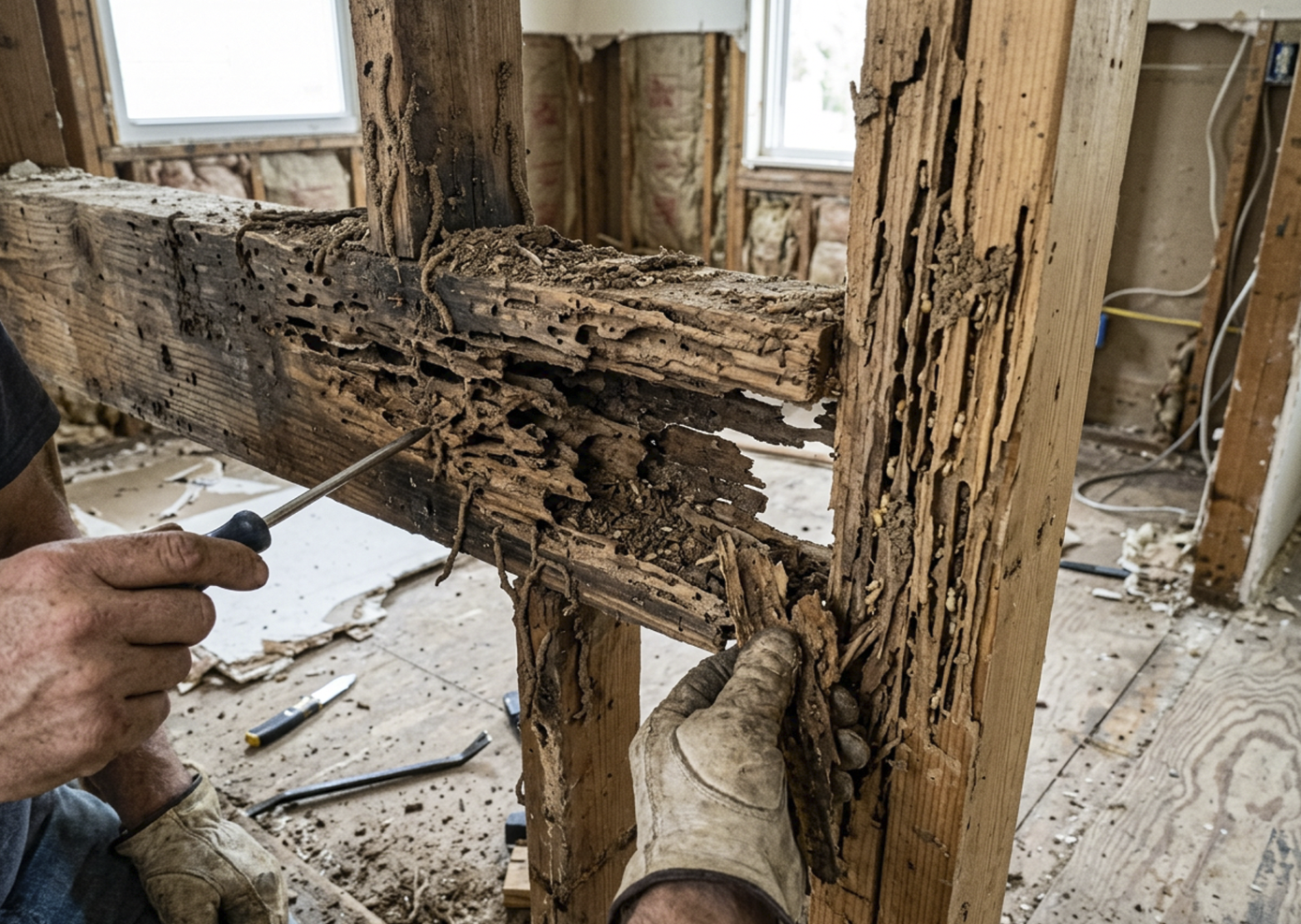
Termite damage to timber

What Are Termites?

Termites are social insects that live in highly organised colonies, which can range from several thousand to millions of individual insects. Often mistaken for white ants, they are in fact more closely related to cockroaches. Australia is home to over 350 termite species, though only a handful cause significant structural damage to buildings.

The most destructive species found across Greater Sydney and NSW include Coptotermes acinaciformis — responsible for the majority of structural damage in Australia — along with Schedorhinotermes intermedius and Nasutitermes exitiosus.

Termite colonies are made up of workers, soldiers, reproductives (alates), and a queen. Workers are soft-bodied, creamy-white insects that do the feeding damage. They are blind, avoid light, and operate entirely within sealed mud tunnels or timber — which is why infestations often go unnoticed for months or years.
How Termites Operate

Subterranean Nesting

Most destructive Australian termites nest underground and travel to food sources through mud tubes — sealed earthen tunnels that protect them from light and predators. These tubes can extend many metres from the nest.

24/7 Feeding Activity

Worker termites feed continuously, 24 hours a day, 7 days a week. They consume cellulose found in timber, paper, cardboard, and even some plastics. A mature colony can devour a standard piece of 3×2 timber in a matter of weeks.

Hidden Destruction

Termites eat timber from the inside out, leaving only a thin outer shell. Infestations are rarely detected until significant damage has already occurred — by which time repairs can run into tens of thousands of dollars.

Swarming Season

Reproductive termites (alates) swarm during spring and early summer — typically after rain — to establish new colonies. If you see winged insects emerging from soil or timber, this is a serious warning sign that a colony is nearby.

Moisture-Seeking

Termites are attracted to moisture. Leaking pipes, poor drainage, inadequate subfloor ventilation, and timber-to-soil contact all create ideal conditions for termite entry and significantly increase risk.

Large Colonies

A mature Coptotermes colony can contain over one million individuals. Multiple foraging parties from a single colony may be active across several properties simultaneously — making professional inspection and treatment essential.

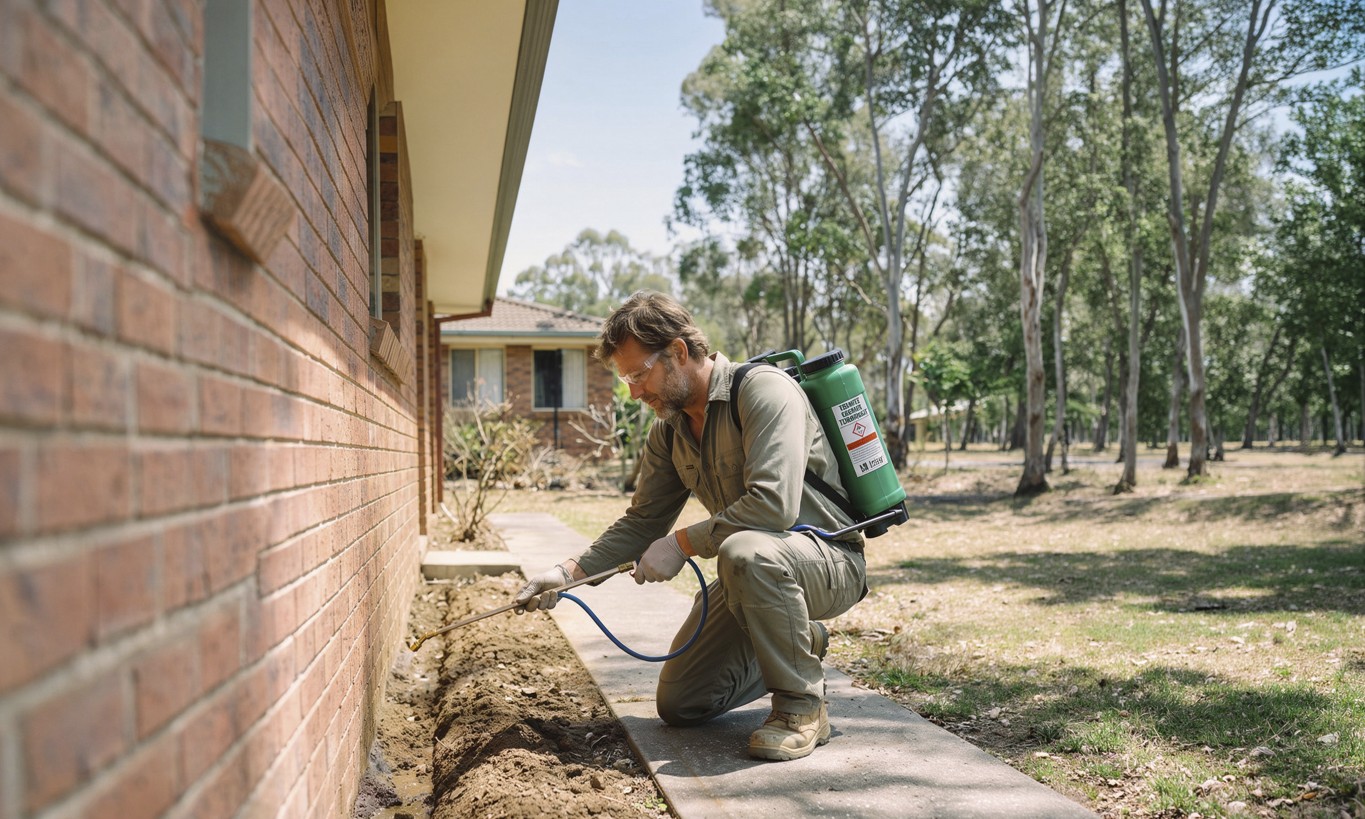
Termite treatment being conducted

The Real Cost of a Termite Infestation

Termites cost Australian homeowners an estimated $1.5 billion in damage every single year — more than fire, flood, and storm damage combined. One in five Australian homes will be affected by termites at some point.

Unlike most natural disasters, termite damage is generally not covered by home and contents insurance. This means the full repair bill — which can range from $10,000 to well over $100,000 for severe structural damage — falls entirely on the property owner.

Because termites work silently and invisibly, many homeowners only discover an infestation when damage is already severe: hollow-sounding skirtings, blistered paintwork, sagging floors, or doors and windows that won't close properly. By this point, load-bearing timbers, floor joists, wall frames, and roof structures may all be compromised.

Annual professional inspections to Australian Standard AS 3660 are your best defence — and in high-risk areas like Greater Sydney, they are strongly recommended.

Signs You May Have Termites

🪵

Hollow-Sounding Timber

Tap walls, skirtings, and door frames — a hollow sound can indicate termites have consumed the timber inside.

🟫

Mud Tubes

Pencil-thin earthen tunnels running along walls, foundations, or pipes are a clear indicator of subterranean termite activity.

🪰

Termite Swarmers

Winged termites or discarded wings near windows and doors — particularly after rain — signal a nearby active colony.

🚪

Sticking Doors & Windows

Frames warping as termites feed and produce moisture can cause doors and windows to stick or become difficult to operate.

Termite Control Solutions We Use

All Kinetic termite treatments comply with Australian Standard AS 3660 and are delivered by fully licensed technicians. We assess each property individually to recommend the most effective, long-term solution.

01

Termite Inspection (AS 3660)

A thorough visual inspection of all accessible areas including subfloor, roof void, internal rooms, and perimeter. We use thermal imaging and moisture meters to detect activity hidden behind walls. You receive a detailed written report with findings, risk assessment, and recommendations.

02

Chemical Soil Barrier (Termidor / Bifenthrin)

A continuous treated zone is created around and under the building using registered termiticides such as Termidor (fipronil) or bifenthrin-based products. These non-repellent chemicals are transferred between termites, eliminating the colony over time. Highly effective with residual protection of up to 8 years.

03

Physical Barriers

Installed during construction or renovation, physical barriers (Homeguard, Kordon, Granitgard) prevent termite entry through concealed paths. These are mandatory under the Building Code of Australia for new construction and provide long-term, chemical-free protection.

04

Baiting Systems (Sentricon / Exterra)

In-ground monitoring stations are installed around the property perimeter. When termite activity is detected, bait containing a slow-acting toxicant (such as hexaflumuron or diflubenzuron) is deployed. Workers carry the bait back to the colony, eliminating it at the source. Ideal for properties where chemical barriers are difficult to install.

05

Reticulation Systems

A network of pipes is installed sub-slab or around the perimeter, allowing termiticide to be replenished periodically without excavation. Popular in new builds and where ongoing access for re-treatment is required. Systems such as Kordon Reticulation provide lasting, replenishable protection.

06

Pre-Construction Termite Barriers

The most cost-effective protection is built in before the slab is poured. We install compliant pre-construction chemical treatments, physical sheeting (Kordon, Homeguard), and reticulation systems for builders and developers — with full AS 3660 documentation for council compliance.

Worried About Termites?

Don't wait until you see damage. Book an inspection today — early detection saves thousands.