Proudly Australian Owned & Operated — Fully Licensed & Insured
Home›Pest Types›Cockroaches
Health Hazard

Cockroaches — Rapid Breeders, Serious Health Risks

Cockroaches are one of the most resilient pests on earth — and one of the most common in Australian homes and businesses. They spread disease, trigger allergies, and can devastate a business's reputation overnight.

Residential & Commercial
100% Satisfaction Guaranteed
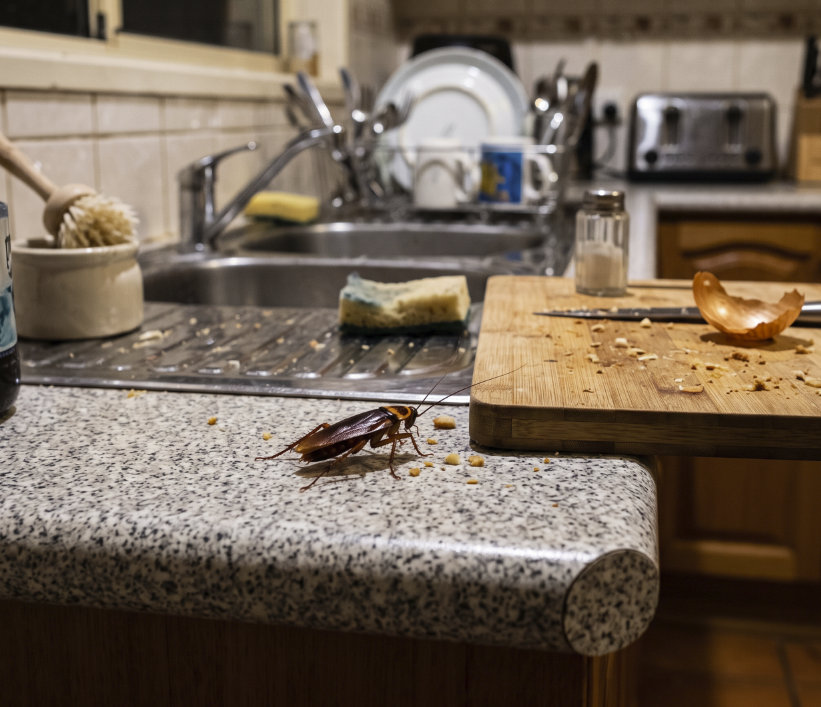
Cockroach in kitchen

What Are Cockroaches?

Cockroaches are one of the oldest insect species on earth, having survived virtually unchanged for over 300 million years. Their remarkable adaptability makes them one of the most difficult pests to control without professional treatment.

Three species are responsible for the vast majority of infestations in Australian homes and businesses. The German cockroach (Blattella germanica) is the most problematic — small (12–15mm), light brown, and highly prolific. It prefers warm, humid environments close to food and water, making kitchens and bathrooms its preferred habitat. A single female can produce up to 300 offspring in her lifetime.

The American cockroach (Periplaneta americana) is much larger (35–40mm), reddish-brown, and found in drains, sewers, subfloors, and roof voids. The Australian cockroach (Periplaneta australasiae) is similar in size and favours warm, humid outdoor environments but readily enters buildings.
How Cockroaches Behave

Nocturnal Activity

Cockroaches are primarily active at night, hiding in cracks, crevices, and dark voids during the day. Seeing them in daylight often indicates a severe infestation where competition for harbourage has forced them out.

Thigmotaxis — Tight Spaces

Cockroaches are thigmotactic — they prefer surfaces that touch both their top and bottom simultaneously. This drives them into narrow cracks, behind appliances, and into wall voids where standard sprays rarely reach.

Rapid Reproduction

German cockroaches breed extremely fast. With a lifecycle of approximately 100 days and an egg case containing up to 40 eggs, populations can explode from a handful to thousands within weeks if left untreated.

Attracted to Warmth & Moisture

Cockroaches are strongly attracted to heat and humidity. Kitchen appliances (dishwashers, fridges, ovens), hot water systems, and areas under sinks are prime harbouring sites year-round in Sydney's climate.

Resistance to Insecticides

German cockroaches in particular are known to develop resistance to commonly used insecticides. This is why rotating chemical classes and using a combination of approaches — baits, sprays, and IGRs — is critical for effective control.

Omnivorous Feeders

Cockroaches eat virtually anything — food scraps, grease, cardboard, soap, glue, dead insects, and even each other. This makes elimination of food sources alone insufficient; professional treatment is always required.

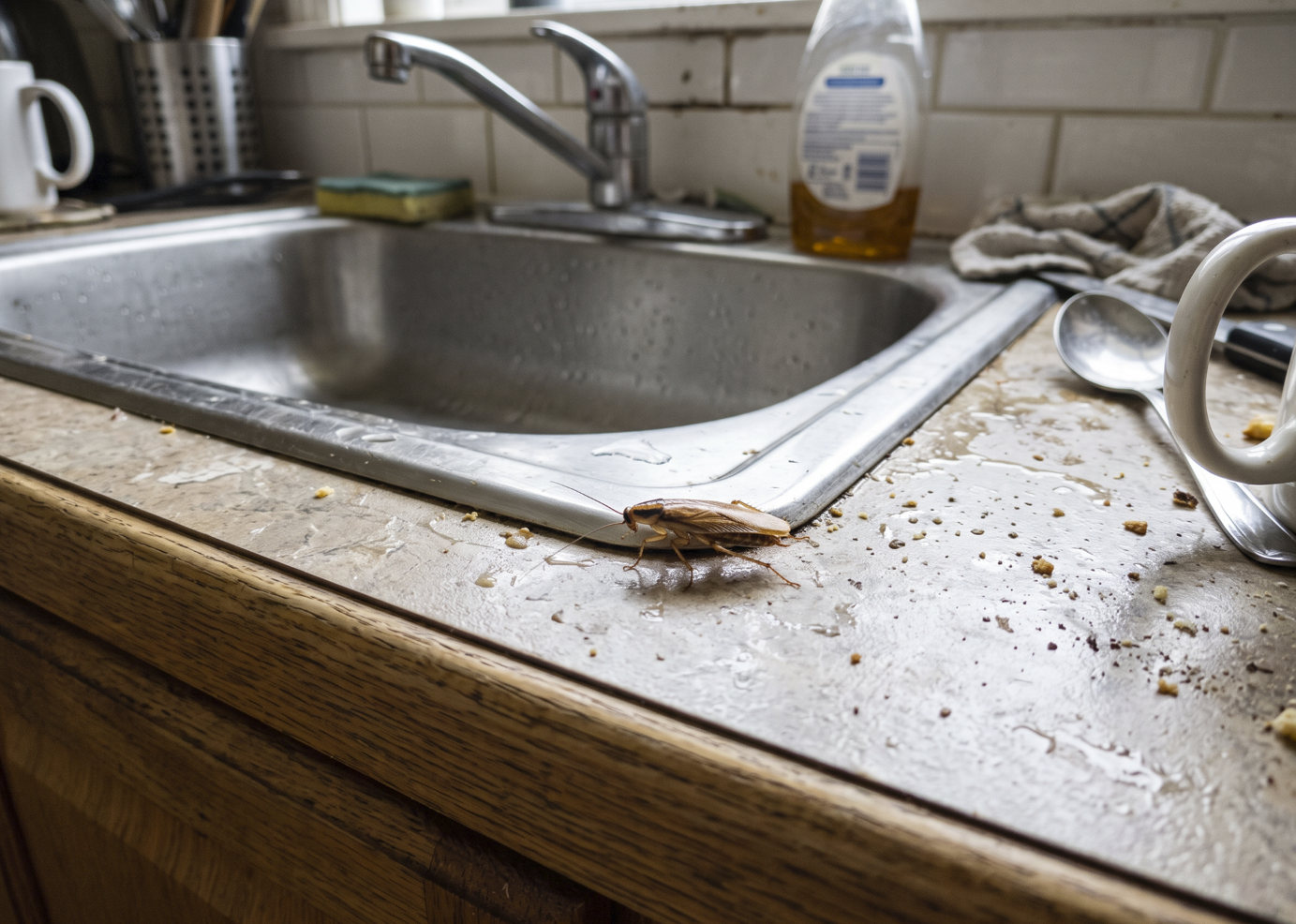
Cockroach near kitchen sink

Health Risks & Business Impact

Cockroaches are proven carriers of over 30 types of bacteria, including Salmonella, E. coli, and Staphylococcus. They contaminate food preparation surfaces, utensils, and food itself as they forage — leaving behind faeces, shed skins, and saliva that carry pathogens linked to food poisoning, gastroenteritis, and dysentery.

Beyond direct contamination, cockroach allergens — found in their droppings, shed skins, and decomposing bodies — are a significant trigger for asthma and respiratory allergies, particularly in children. Studies show cockroach allergen exposure can significantly worsen asthma outcomes.

For businesses — especially food service, hospitality, and healthcare — a cockroach infestation can result in failed health inspections, closure orders, negative online reviews, and lasting reputational damage. A professional, discreet treatment program is essential for any commercial operation.

Signs of a Cockroach Infestation

🟤

Droppings

Small dark droppings resembling coffee grounds or black pepper found in cupboards, behind appliances, and along skirting boards.

🥚

Egg Cases (Oothecae)

Brown, capsule-shaped egg cases found in hidden areas — behind fridges, in pantry corners, under sinks — indicate an active breeding population.

👃

Musty Odour

A distinctive musty, oily smell — particularly strong in confined spaces — is produced by cockroach pheromones and becomes more noticeable as populations grow.

🌙

Live Insects at Night

Seeing cockroaches when you turn on kitchen lights at night is a strong indicator of a growing infestation requiring immediate professional attention.

Cockroach Control Solutions We Use

Effective cockroach control requires a combination of approaches tailored to the species, location, and severity of the infestation. Our licensed technicians develop a targeted program for every property.

01

Professional Gel Baits (Advion / Maxforce)

Highly effective gel baits are applied precisely into cracks, crevices, and harbourage areas where cockroaches travel and hide. Cockroaches consume the bait and return it to the harbourage, creating a cascading effect that kills the entire population — including eggs — via secondary kill. Ideal for kitchens, food preparation areas, and commercial premises where spray use is restricted.

02

Residual Surface Sprays

Registered synthetic pyrethroid insecticides (deltamethrin, bifenthrin, permethrin) are applied to surfaces, wall junctions, subfloor voids, and roof spaces where cockroaches travel. The residual activity provides ongoing kill for weeks to months after application.

03

Insect Growth Regulators (IGRs)

IGRs such as pyriproxyfen and hydroprene disrupt the cockroach lifecycle by preventing juveniles from developing into reproductive adults. Used in combination with baits and sprays, IGRs dramatically reduce the speed of population recovery and resistance development.

04

Crack & Crevice Treatment

Insecticidal dust (silica dust, diatomaceous earth) or aerosol is injected directly into wall voids, electrical conduits, and tight harbourage areas inaccessible to spray or bait. Particularly effective for German cockroach infestations in commercial kitchens and food handling facilities.

05

Drain Treatment

American and Australian cockroaches frequently breed in drains and sewer systems. We treat drainage points with registered products and recommend drain maintenance to eliminate this access point and breeding site.

06

Follow-Up & Monitoring

For commercial premises, we recommend ongoing monitoring programs using sticky monitoring boards, regular scheduled inspections, and treatment adjustments. This ensures populations don't re-establish and provides documentation for food safety compliance.

Got a Cockroach Problem?

Fast, discreet treatment for homes and businesses. Same-day and next-day appointments available.