Proudly Australian Owned & Operated — Fully Licensed & Insured
Home›Pest Types›Spiders
Venomous Species Present

Spiders — Know the Risks, Stay Protected

Australia is home to some of the world's most venomous spiders. While most species are harmless, several found in the Greater Sydney area pose genuine health risks — particularly to children, the elderly, and those with allergies.

Residential & Commercial
100% Satisfaction Guaranteed
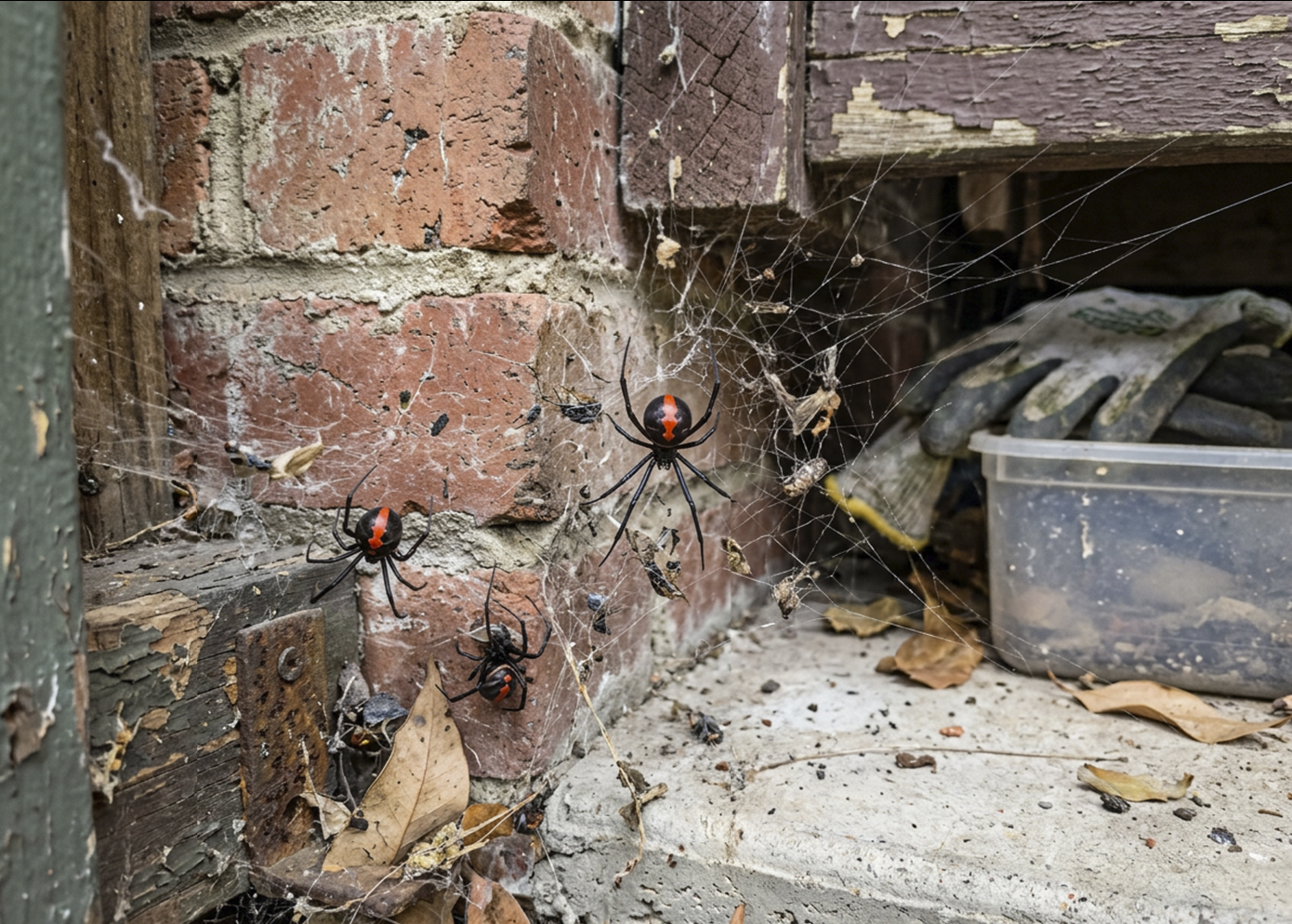
Redback spider on house wall

Spiders in Australia

Australia has over 10,000 spider species, making it one of the most spider-diverse countries on earth. Spiders are predators — they feed on insects and other arthropods — and play an important role in the ecosystem. However, when they establish themselves inside homes and around families, they become a genuine health and safety concern.

All spiders possess venom used to immobilise prey, but the vast majority of Australian species are not considered medically significant to humans. The exceptions — the Sydney Funnel-web and the Redback — are found right across the Greater Sydney region and can deliver bites that require urgent medical treatment.

Beyond venom risk, spider populations in and around a property tend to grow when the property has high numbers of insects (their prey) and ample harbourage — making integrated pest management important. Treating the overall insect population reduces the food source that sustains large spider numbers.
Know Your Spiders

High Risk

Sydney Funnel-Web Spider

Atrax robustus — Considered one of the world's most dangerous spiders. Dark, glossy, aggressive when provoked. Favours moist, cool environments in garden beds, under rocks, and in roof cavities. Males wander in summer seeking mates and can enter homes. Antivenom is available — seek emergency treatment immediately after any bite.

High Risk

Redback Spider

Latrodectus hasselti — Black with a distinctive red stripe on the abdomen. Australia's most commonly bitten spider. Favours dry, sheltered spots: under outdoor furniture, in letterboxes, garden sheds, and subfloors. Bites cause severe localised pain and can produce systemic effects. Antivenom is available.

Moderate Risk

White-Tail Spider

Lampona cylindrata — A wandering hunter (no web) with a distinctive white spot at the tip of the abdomen. Found inside homes, particularly bedding, clothing, and towels left on floors. Bites can cause localised pain and irritation. Often blamed for skin lesions, though this remains medically debated.

Moderate Risk

Black House Spider

Badumna insignis — Dark grey-brown, builds messy funnel-shaped webs in corners, window frames, and eaves. Very common in Sydney homes. Bites are infrequent but can cause local pain, nausea, and sweating. The primary spider responsible for web build-up on the exterior of houses.

Low Risk

Huntsman Spider

Isopoda species — Large, flat, fast-moving, and alarming in appearance but generally harmless. A beneficial predator that feeds on insects, cockroaches, and other spiders. Bites are rare and produce only mild, temporary effects. Despite their appearance, they do not warrant concern beyond aesthetics.

Low Risk

Garden Orb Weaver

Eriophora species — Common, round-bodied spiders that build large orb webs in gardens, on fences, and between structures. Active at night. Bites are rare and mild. Generally beneficial as natural insect control, though large populations around entry points may be unwelcome.

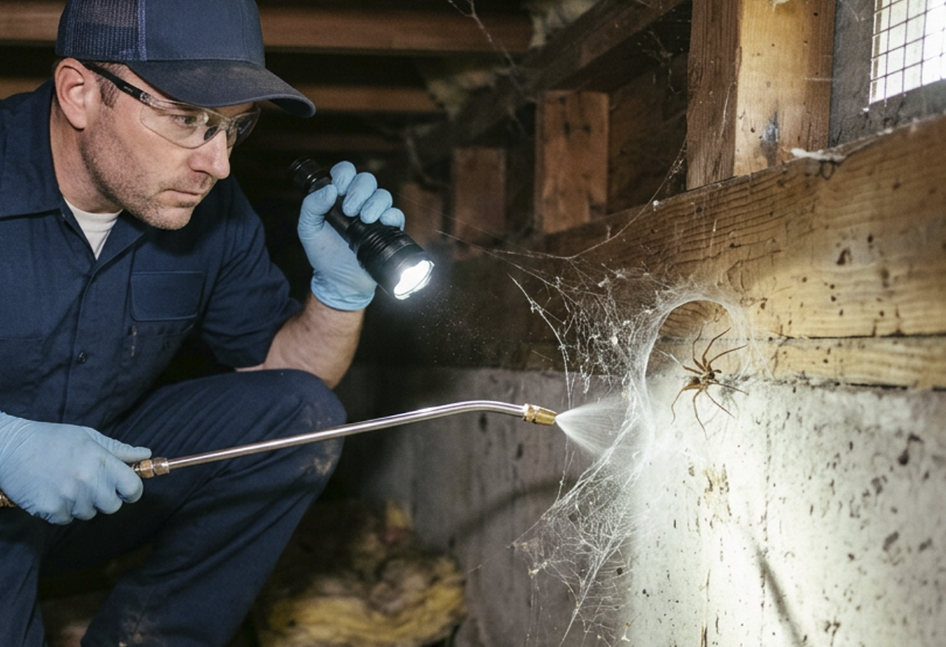
Pest technician treating for spiders

Why Spider Control Is Important

The presence of medically significant spiders — particularly Redbacks and Sydney Funnel-webs — in and around a home is a genuine safety issue, especially for households with children, elderly residents, or pets. A single Redback nesting in a letterbox, sandpit, or garden toy can deliver a medically serious bite.

DIY sprays applied to visible webs often fail to address the underlying population, as they don't penetrate harbourage areas and have poor residual activity. Professional treatment using registered residual products applied to all surfaces spiders travel across — including walls, eaves, fences, and garden borders — delivers far more effective, lasting results.

Beyond safety, large spider populations — particularly Black house spiders — produce significant web build-up on home exteriors, eaves, and window frames that is unsightly and difficult to maintain without addressing the underlying infestation.

Spider Control Solutions We Use

Our spider treatments target both the insects and the spiders themselves, delivering long-lasting protection across the full property perimeter.

01

Residual Surface Spray Treatment

Synthetic pyrethroid insecticides (bifenthrin, deltamethrin) are applied to all internal and external surfaces spiders are likely to traverse — walls, ceilings, skirtings, eaves, fences, and garden perimeters. Residual activity provides protection for weeks to months. Spiders that cross treated surfaces pick up lethal doses even after the spray has dried.

02

Web Removal & Harbourage Treatment

All accessible webs are physically removed prior to chemical application. Harbourage areas — subfloor voids, roof cavities, garden beds, retaining walls, and rockeries — are treated specifically to address the areas where spiders shelter and breed, including Redback hotspots under outdoor furniture and fittings.

03

Insecticidal Dust in Cavities

Silica-based or deltamethrin dust is applied to wall voids, roof spaces, and subfloor areas where spiders commonly harbour. Dust treatments have excellent longevity and work well in dry cavity environments where sprays have limited reach or residual activity.

04

General Insect Population Reduction

Spiders follow their food source. Reducing the overall insect population around the property — particularly moths, flies, and ants — directly reduces the food supply that sustains large spider numbers. A full general pest treatment is often recommended alongside spider-specific treatment for best results.

05

Physical Exclusion

We identify and advise on entry points where spiders are accessing the building — gaps around pipes, poorly sealed doors and windows, vents without screens. Sealing these entry points reduces ongoing ingress and complements chemical treatment for long-term control.

06

Preventative Annual Program

An annual or bi-annual perimeter spray program keeps spider populations at low levels year-round. Particularly recommended for properties with established Redback populations, funnel-web activity, or children and pets who use outdoor areas frequently.

Concerned About Spiders?

Protect your family from Australia's venomous species. Professional treatment, lasting results.